This paediatric emergency department interior design project for Royal Devon University Healthcare NHS Foundation Trust was delivered in collaboration with Studio KHid. The scheme transforms the Children’s Emergency Department and Paediatric Assessment Unit into an uplifting, child centred healthcare environment. It is designed to reduce anxiety, support wellbeing and improve the overall patient and family experience.
The immersive under the sea theme creates a calm, welcoming paediatric healthcare environment for children, families and clinical teams.
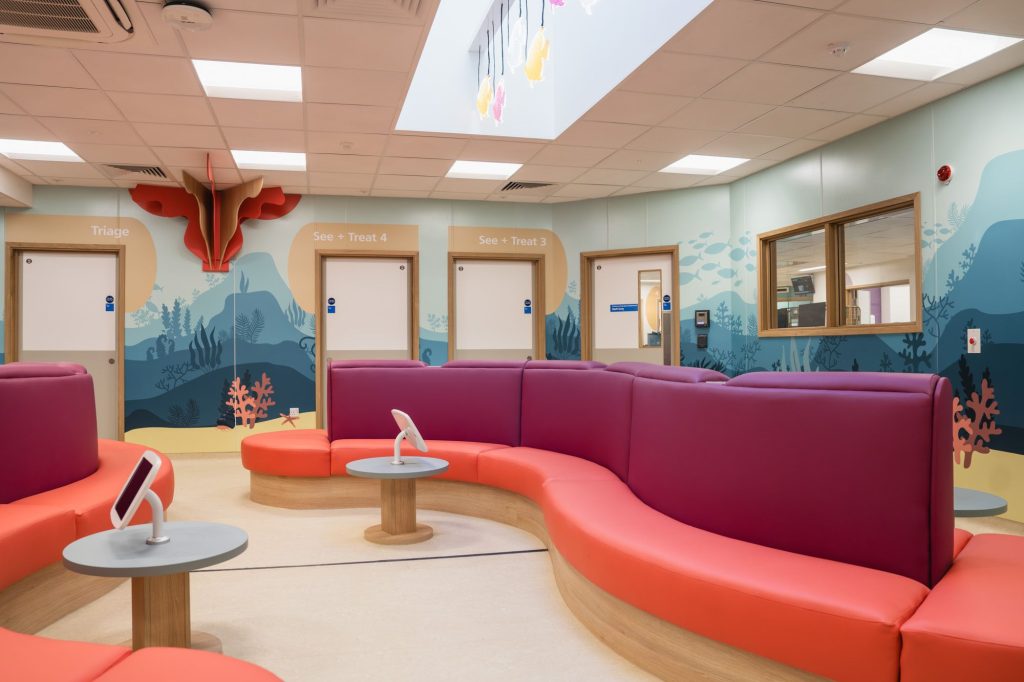
Our approach to paediatric healthcare interior design focused on creating a fully immersive patient journey from arrival through to treatment. The under the sea concept has been woven consistently throughout waiting areas, corridors, triage, treatment rooms and see + treat spaces. It supported intuitive wayfinding, distraction and emotional reassurance.
A key consideration was inclusive and neurodiverse friendly design. The scheme balances playful public areas with calmer, low stimulation clinical spaces, supporting a wide range of sensory needs.
The paediatric emergency waiting room was a central focus of the project. We developed the layout to maximise seating capacity while maintaining comfort, accessibility and clear visibility for staff and families.
We designed bespoke seating and tables specifically for the space, balancing durability with the demands of a high traffic NHS healthcare environment. Interactive wall equipment, bespoke coffee table tablets, custom fish inspired lighting and coral installations actively encourage distraction and engagement within the waiting area.
To support modern patient and family needs, we integrated device charging points throughout the space, allowing parents and patients to stay connected with family and loved ones during often stressful waiting periods.
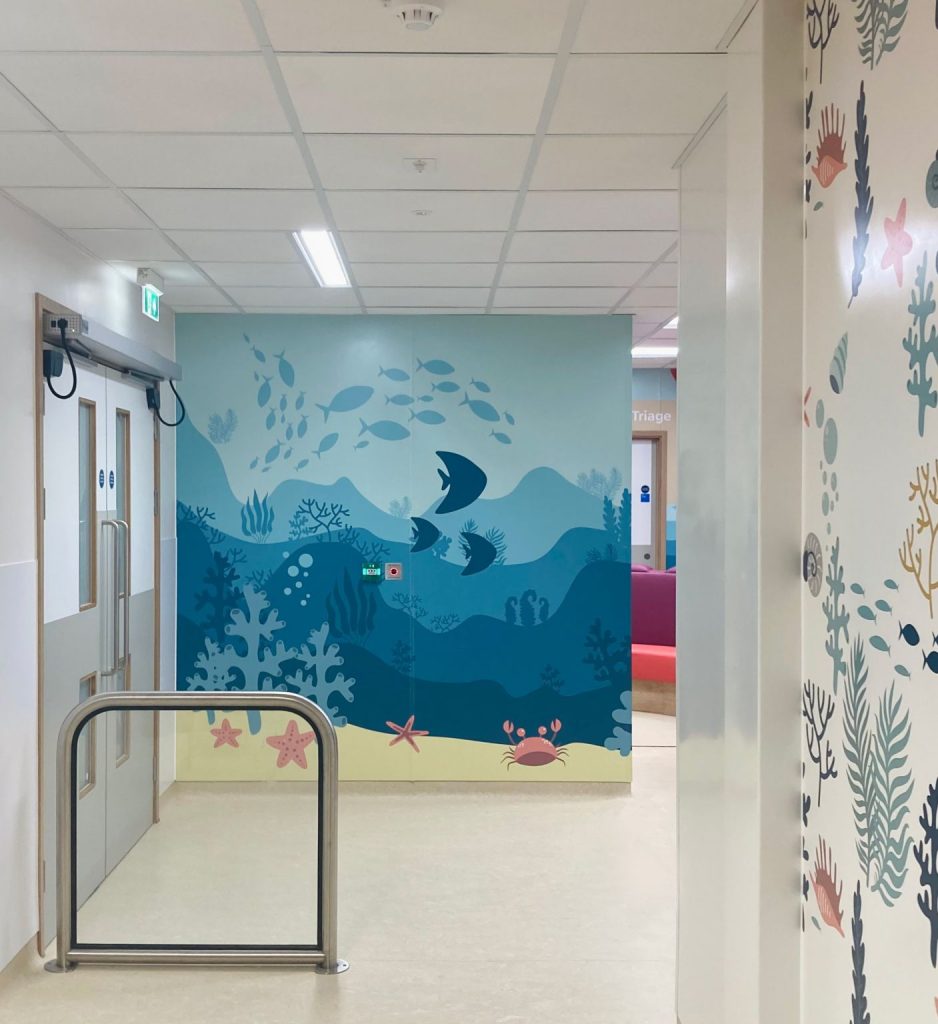
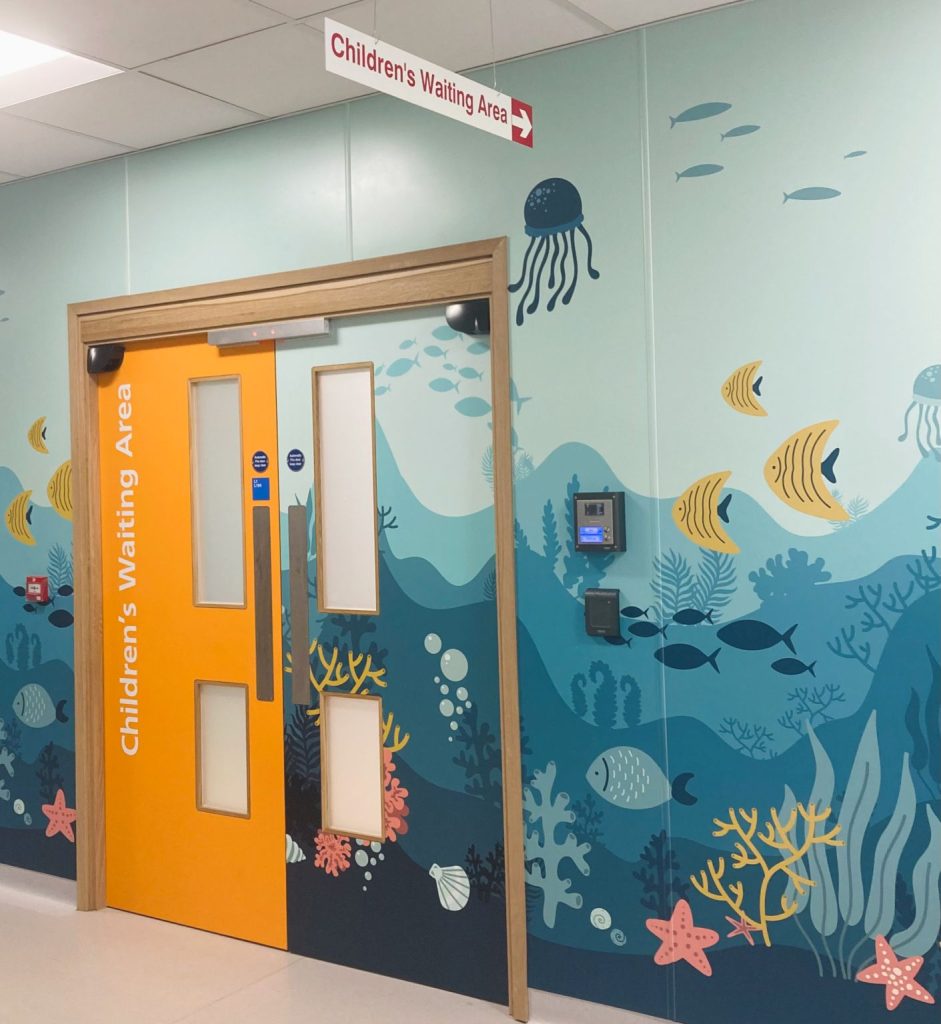
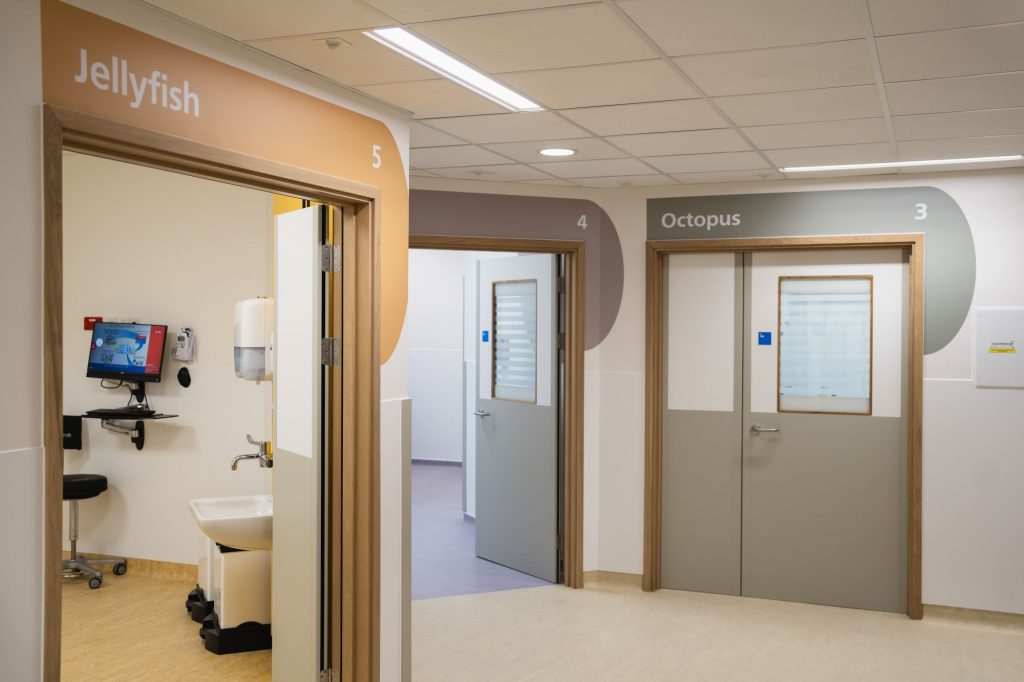
We embedded wayfinding and signage directly into the interior design through bespoke wall graphics applied to Digiclad panels, improving navigation while reinforcing the overall narrative. These graphics combine playful illustration with clear visual cues, improving navigation and reducing anxiety within the children’s emergency department.
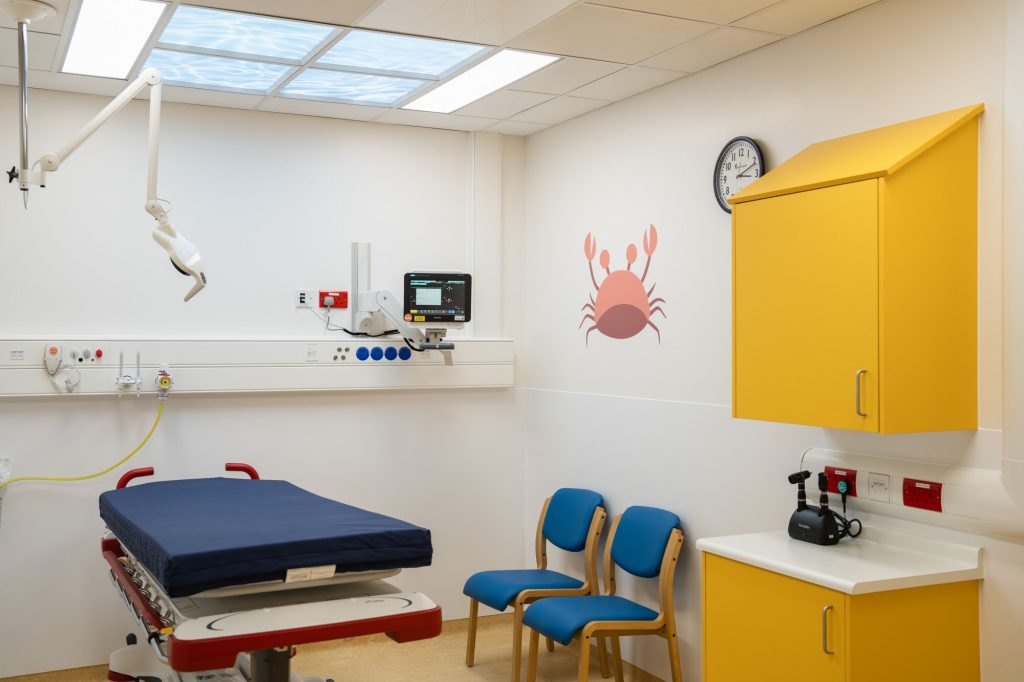
Across treatment rooms, triage areas and see + treat rooms, the interior design becomes intentionally calmer. Simplified under the sea graphics, a softer colour palette and reduced visual complexity help create a reassuring clinical environment suitable for assessment and treatment.
This approach is particularly supportive for neurodivergent patients and children who may find highly stimulating environments overwhelming. Interactive digital screens offer gentle distraction without compromising clinical clarity.
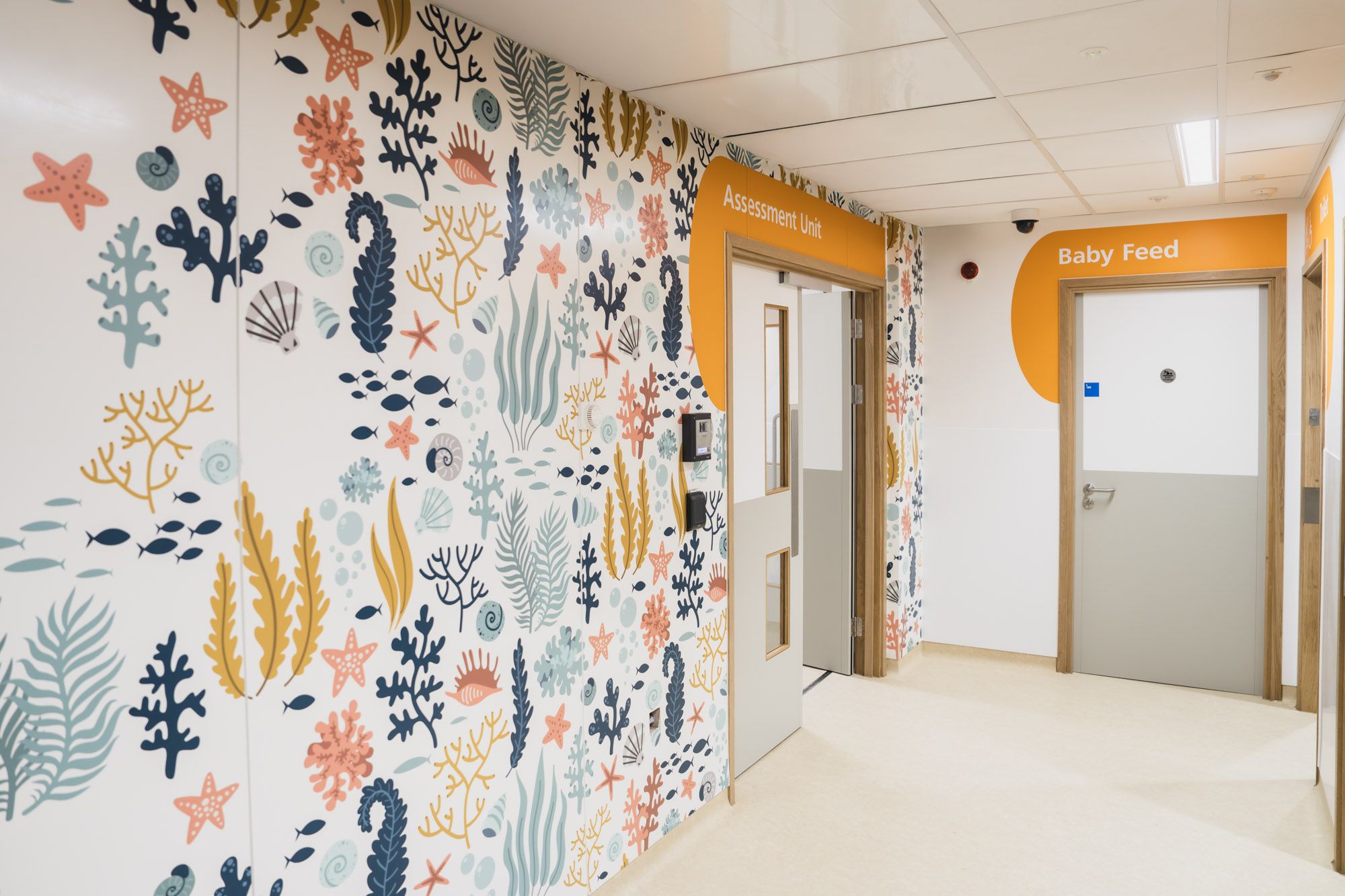
We used eight colours throughout the paediatric emergency department interior scheme. These colour variations help define individual rooms and zones, supporting intuitive wayfinding while adding warmth, character and identity to the clinical setting.
Forbo Marmoleum flooring was specified throughout the paediatric emergency department due to its strong sustainability credentials, durability and suitability for healthcare environments. This aligns with NHS sustainability goals and responsible interior design principles.
Key sustainability credentials include:
The completed paediatric emergency department provides a calm, engaging and inclusive healthcare environment for children, families and NHS staff. Immersive storytelling, bespoke furniture, inclusive design principles and sustainable materials show how thoughtful interior design can transform the paediatric emergency care experience.
This project highlights Boaz Studio’s expertise in NHS interior design, paediatric healthcare environments, sustainable healthcare design and collaborative work in complex clinical settings.
We are proud to share our recent collaboration with Studio KHid on the Aspris Woodview SEN School project, located in the London Borough of Bromley. This specialist SEN school provides tailored education services to support young people with autism in a unique learning environment.
Aspris Woodview is a purpose-built SEN school designed to meet the specific needs of young people with autism. Situated within the London Borough of Bromley, the school offers a safe, supportive, and engaging atmosphere that nurtures each student’s development.

The new facility features a broad range of dedicated spaces to support holistic learning and wellbeing. These include primary, secondary, and sixth form classrooms, as well as therapy and sensory rooms designed to cater to individual sensory needs. Additionally, there are dining and vocational areas, a library, and a sports hall, all contributing to a dynamic learning environment.

The design of the Aspris Woodview SEN school creates a contemporary, engaging, and robust space. This multi-purpose environment enables teaching staff to tailor learning approaches and provide individual support that promotes student progress and wellbeing. Beyond academics, the design focuses on enhancing the wellbeing of students. By creating spaces that encourage comfort and safety, the school supports emotional and social development, ensuring that young people feel secure and motivated to learn.

We are honoured to have worked alongside Studio KHid to deliver this project, contributing to a SEN school that sets a new standard in specialist education design. Together, we have created an environment where young people with autism can thrive, both academically and personally.
A collaborative healthcare design project with Studio KHid, Boaz Studio was commissioned to enhance the Bigbury Orthopaedic Surgical Suite at Derriford Hospital with large-scale graphic murals. Our goal was to create a space that is both functional and welcoming through custom illustrations and carefully designed graphics.
Working closely with project architects Stride Treglown (a fellow B Corp!), we adopted their colour scheme to define the department’s character and improve wayfinding. The design divides the suite into three zones, each with its own bold colour palette:
Operating Theatres Area – Calming shades of blue enhance focus and concentration.
Staff Areas – Vibrant colours break away from typical clinical greys and whites, boosting staff wellbeing.
Reception and Waiting Areas – Warm, natural tones promote comfort and calm.
We worked closely with Significant Signs to bring our bespoke illustrations to life, transforming them into large-scale printed murals.
We centred the design around Bigbury-on-Sea, using its coastal landscape to inspire a sense of calm and connection to nature. Boaz Studio created original illustrations, bringing elements of Bigbury and Burgh Island into key areas of the suite.

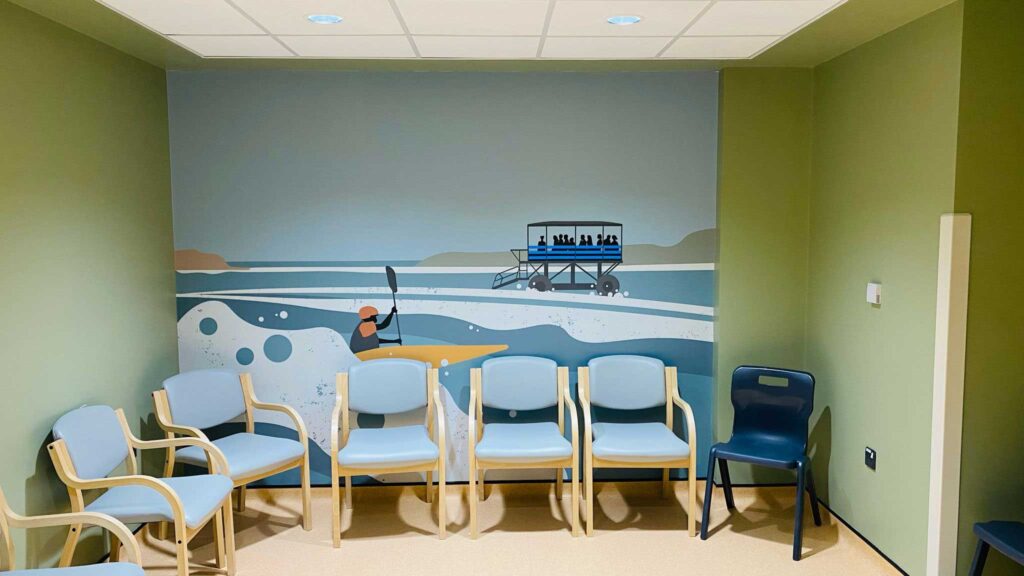
Our bespoke illustrations guide patients and staff through a visual journey of Bigbury-on-Sea and Burgh Island. Combining coastal imagery, calming colours, and clear wayfinding signage, the design boosts both patient and staff wellbeing.
Interior design in healthcare spaces plays a crucial role in reducing patient anxiety, improving staff efficiency, and enhancing overall experience. The Bigbury Orthopaedic Surgical Suite shows how thoughtful design and bespoke illustration can transform a space beyond its practical use.
At Boaz Studio, we specialise in creating human-centred environments that are both beautiful and practical. If you’d like to discuss a project, get in touch.
In collaboration with Studio KHid, Boaz Studio worked with the Royal Devon & Exeter NHS Foundation Trust to develop a design guide that will improve the ease of navigation around Wonford Hospital for all visitors.
We changed wing numbers to make more logical sense from the main entrance, colour coding each area so everyone would know which area they were in. Clear signage was developed to be used on walls, floors and doors. Embracing the existing use of Devon rivers being used for ward names, we expanded upon on this to bring clarity to floor levels using Devon’s natural landscape: rivers; river banks and fields; and the high moorland. The imagery used for this mirrored the user journey at that time either through motion or reflection.
The result was a comprehensive design guide outlining how to create an improved environment at Wonford Hospital for both patients and staff, with considerations for all abilities, dementia users, and younger users.
The aim and purpose of the lighthouse was to create a space for students within the school to encourage creative writing, to explore and inspire new ideas and works.
We created a space that showcases books and art created by students and staff at its heart. By using the one colour throughout the space, it enhances the features of the room whilst making sure that the books, journals and newspapers are the highlight.
When sourcing the elements for the room we envisaged an eccentric travelling uncle bringing back random objects from his escapades. Items were sourced from auctions, eBay, Facebook and charity shops.
We were determined to make the project as sustainable as possible through reuse and renewal of the furniture and fittings now in the space, giving new life to old artefacts.
The brief for The Old Library was a challenging one, primarily driven by budget and the amount of elements required. We made robust layouts that would attract users to the space and make the most of the buildings features.
We worked very closely with the clients and broader members of the community to help fund and build our proposals. We managed to create a big impact by selecting a clear material palette that appeals to the broad range of users to the space.