If people can work from home, why would they choose to come into the office?
It's a question every organisation should be asking before they think about desks, finishes or furniture.
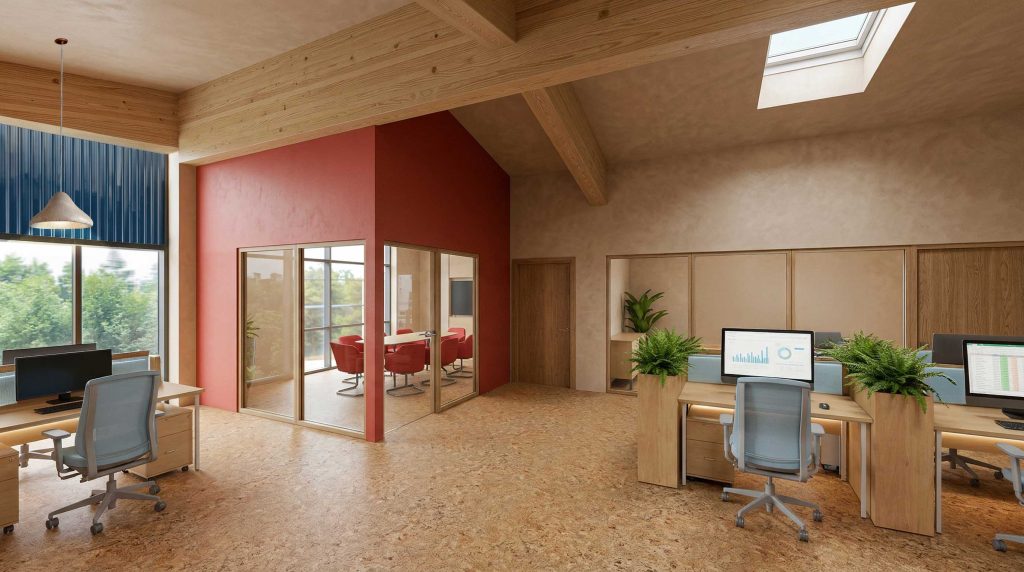
The workplaces that people enjoy spending time in aren't necessarily the biggest or the most expensive. They're the ones that make work easier. They give people somewhere to concentrate when they need to, somewhere to bump into colleagues, somewhere to share ideas, and somewhere that simply feels good to be. They're comfortable, healthy, and thoughtfully designed. They make the most of natural light, support different ways of working, and use materials that are better for both people and the planet.
That's exactly the kind of thinking we're applying to the Innovation Nursery project. Throughout this guide, we'll explore the principles we use when designing workplaces that are healthier, more sustainable and better suited to the people who use them every day.
Want to find out how we can help with your office project?
In this guide we'll cover:
It's surprisingly common for office projects to begin with a furniture layout.
How many desks do we need? Where do the meeting rooms go? Can we squeeze another bank of workstations into the corner?
They're sensible questions, but they're not the first questions.
Before we put pen to paper, we want to understand how people actually use a space. Where do conversations happen? Which teams need quiet? Do people spend most of their day on video calls, or working together around a table? Are there spaces everyone gravitates towards already?
When you understand the people first, the layout usually starts to make sense by itself.
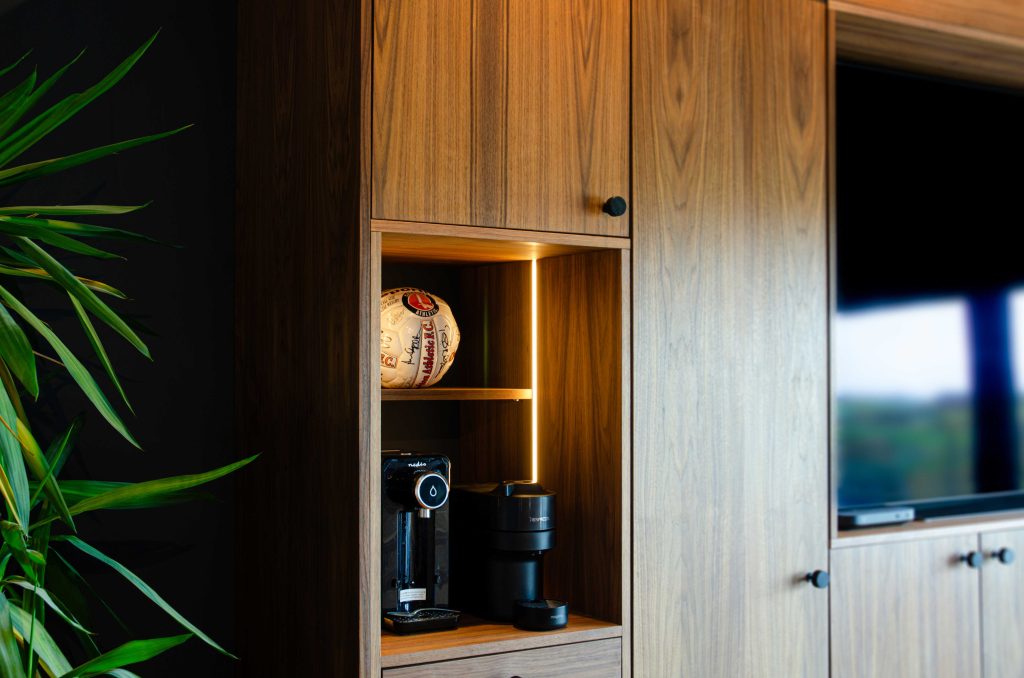
There's no universal checklist.
Some businesses need plenty of collaborative space. Others need calm, quiet environments where people can focus for long periods. Most need a bit of both.
Instead of asking people to do everything from the same desk, we think it's better to give them a choice. That might mean comfortable breakout areas, smaller meeting spaces, project tables, phone booths or somewhere to take five minutes away from a screen.
The best workplaces let people move naturally throughout the day instead of keeping everyone rooted to one spot.
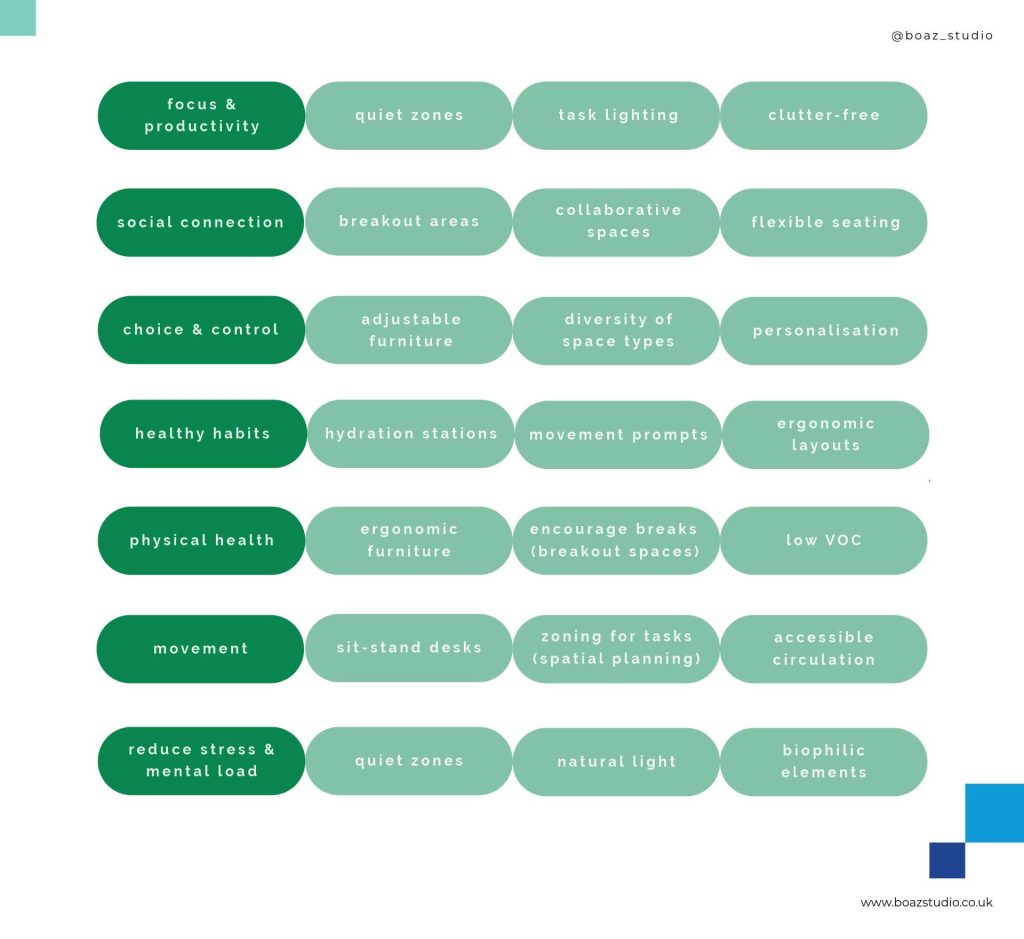
For us, sustainability isn't a layer that's added at the end of a project. It influences hundreds of decisions from the very beginning.
Sometimes that's choosing furniture that can be repaired instead of replaced. Sometimes it's finding a local supplier rather than shipping products across the country. Sometimes it's designing a space that can be adapted in five years' time instead of stripped out and started again.
But sustainability is also about creating healthy places to spend time in.
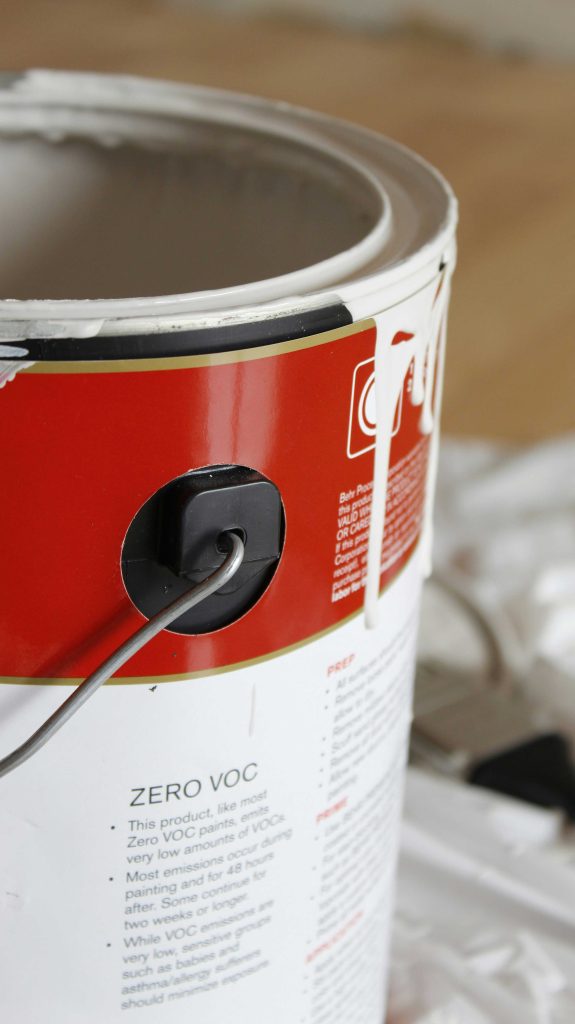
The materials we specify become part of people's everyday environment, so we think carefully about what they're made from and what they release into the air. Wherever possible, we look for low or no VOC paints, finishes, adhesives and furnishings to help support better indoor air quality. We also favour natural and responsibly sourced materials that age beautifully and are built to last.
Many of these principles are reflected in recognised guidance such as the WELL Building Standard, BS EN 16798 (which covers the energy performance and indoor environmental quality of buildings), and recommendations from the British Council for Offices (BCO), all of which place increasing importance on creating healthy, comfortable workplaces. While every project is different, it's encouraging to see wellbeing becoming a bigger consideration across workplace design.
However, the most sustainable interior often isn't the one with the longest list of environmental certifications. It's the one that's still supporting the people who use it fifteen years from now.
That's the mindset we've brought to Innovation Nursery, where longevity, adaptability and healthy material choices have shaped many of the decisions we've made.
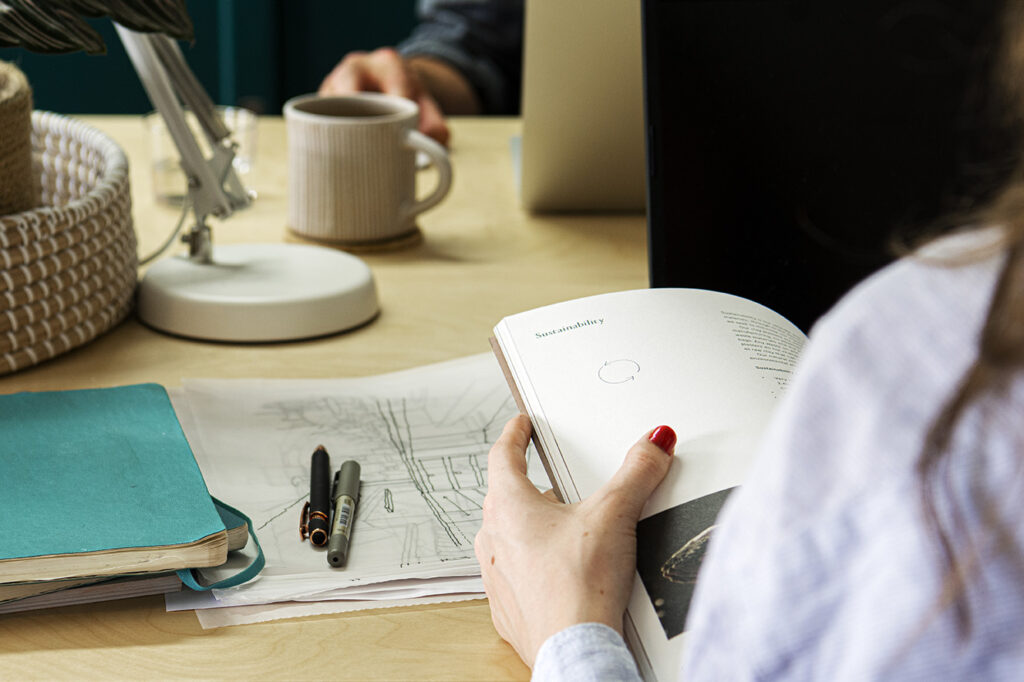
Probably more than most people realise.
We spend around a third of our lives at work, yet it's easy to overlook how much our surroundings influence the way we think, feel and perform.
Natural light is one of the biggest factors. A bright workspace that follows our natural rhythms can improve mood, reduce eye strain and help people stay alert throughout the day. Where daylight is limited, carefully considered artificial lighting becomes just as important.
Then there's ergonomics. Comfortable, supportive furniture isn't a luxury—it's what allows people to work comfortably over long periods without unnecessary strain. Adjustable seating, well-planned desk heights and varied work settings encourage movement throughout the day instead of keeping people in one position for hours.
We're also strong believers in biophilic design. That doesn't just mean adding a few plants after the fit-out is complete. It means designing spaces that help people feel more connected to nature through natural materials, views outside, organic textures, planting, daylight and calming colour palettes. These subtle connections can reduce stress and make workplaces feel more welcoming and restorative.
Healthy workplaces are also healthier to breathe in. Choosing products with low or no volatile organic compounds (VOCs) helps reduce the chemicals released into indoor air, creating environments that are better for both people and the planet.
Most people won't consciously notice these decisions. They'll simply notice that the space feels comfortable, calm and somewhere they enjoy spending time.
To us, that's what good workplace design should do.
Businesses change. Teams grow. Technology evolves.
A workplace should be able to keep up.
That's why we're always looking for flexibility. Modular furniture, adaptable layouts and spaces that can serve more than one purpose all help a workplace evolve instead of becoming obsolete.
It usually saves money too. Making thoughtful decisions now is almost always cheaper than starting again a few years down the line.

Absolutely—but that doesn't mean filling the office with logos.
The strongest workplaces express a brand more subtly. Through the materials people touch, the atmosphere they experience, the colours they remember and the values that are reflected in the design.
A sustainable business shouldn't feel disconnected from its workplace. Likewise, a creative business shouldn't feel generic.
Your environment is often the first physical experience someone has of your organisation. It should tell the same story as your website, your people and your work.
There isn't a single feature that transforms an office.
It's rarely the coffee machine, the games room or the statement reception desk.
It's how everything works together.
People enjoy coming into workplaces that feel comfortable, adaptable and welcoming. Places where they can get their heads down when they need to, collaborate when it matters and feel connected to the people around them.
Those are the kinds of projects we love. Based in Truro, we work with businesses across Cornwall and the South West.
Every project is different. The overall cost depends on the size of the workplace, the scope of work and whether you're refurbishing an existing office or starting from scratch. We can advise on options that suit your budget while focusing investment where it will have the biggest impact.
Every project is different, but most workplace interior design projects take anywhere from a few weeks to several months, depending on their size and complexity. We typically follow the RIBA Plan of Work, adapting it to suit interior design projects, so each stage is clearly defined from briefing and concept design through to technical design and completion. Where contractors and consultants are involved, we'll work closely with the wider team to help coordinate programmes and keep the project moving smoothly.
Absolutely. Small changes can often make a significant difference. Improving lighting, introducing more flexible furniture, reconfiguring layouts, selecting healthier materials or creating better breakout spaces can all enhance the way a workplace feels and functions without starting from scratch.
Yes. Although we're based in Truro, we work with clients across Cornwall, the South West and further afield.
The physical environment has a direct impact on how people feel and work. Factors such as natural light, air quality, acoustics, ergonomics and access to different types of spaces can all contribute to comfort, concentration and collaboration. A thoughtfully designed workplace helps create an environment where people can do their best work.